
Micah Projects: Sowing the Seeds of Shared Leadership
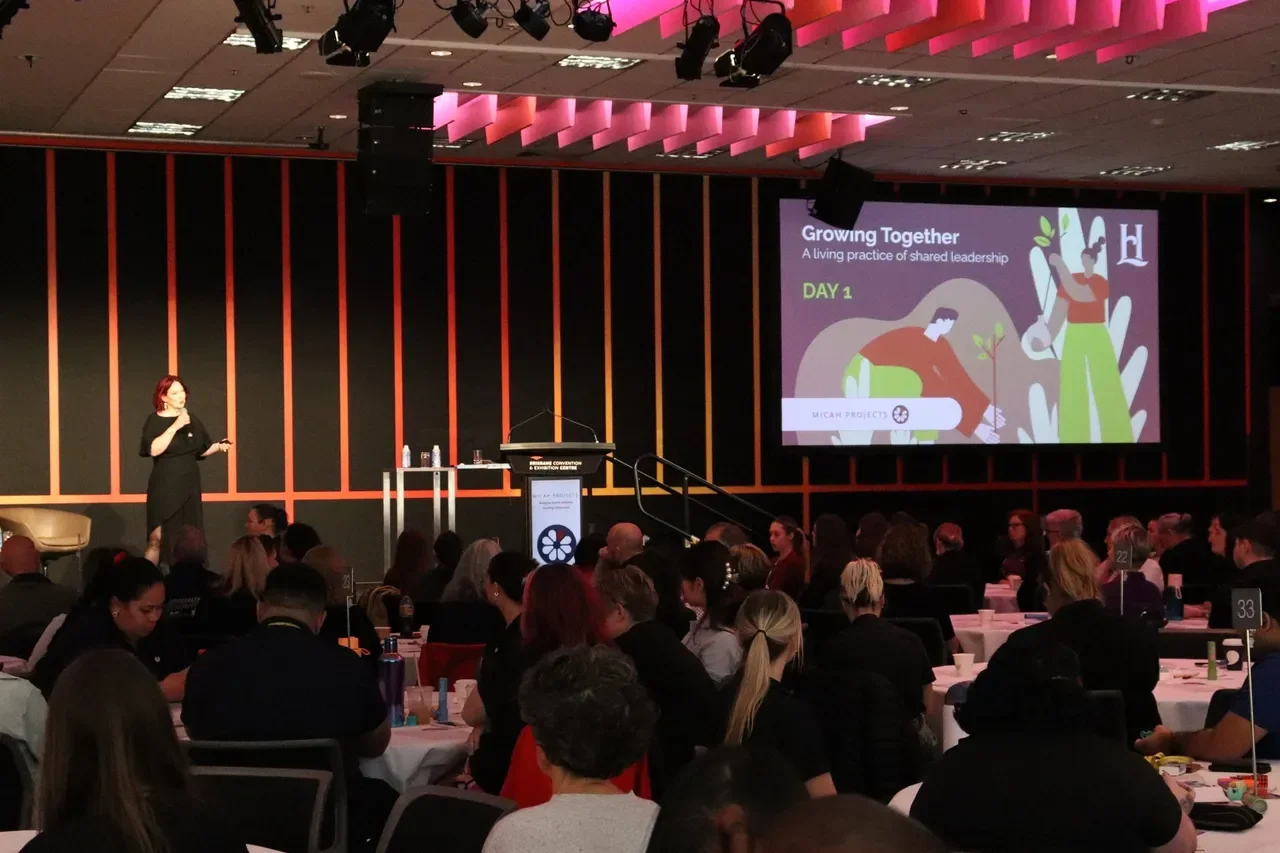
Last month, I was honoured to return and deliver Micah Project’s Whole of Organisation Days for the second year in a row.
Nearly 400 team members gathered at the Brisbane Convention & Exhibition Centre to reflect on and celebrate the organisation's impac, and support every person in "Growing Together" to lead Micah Projects' future.
In 2024, we told the Story of the Bunya Pine, marvelling at the intricate, unseen networks that nourish entire forests. This became a metaphor for Shared Leadership at Micah Projects: connecting through purpose, care, and collective responsibility, channelling resources to areas of need for a thriving community.
This year, Growing Together was an invitation to sow the seeds of change: To breathe life into the practice of Shared Leadership so it takes root in every corner of the organisation.

Why Shared Leadership?
Shared Leadership is a forward-thinking, evidence-based framework for leadership, and part of a broader shift across sectors, from hierarchy to humanity.
The challenges we face as a society are too complex for one person, or even one group, to navigate alone. Like many organisations that work for systemic social change, Micah Projects is embracing leadership that is adaptive, distributed, and deeply grounded in social justice.
Shared Leadership is not about a title. It’s about how the team shows up and creates change together. Leadership happens in conversations, in decisions, in how each person listens and acts.
It is something everyone practices, every day.
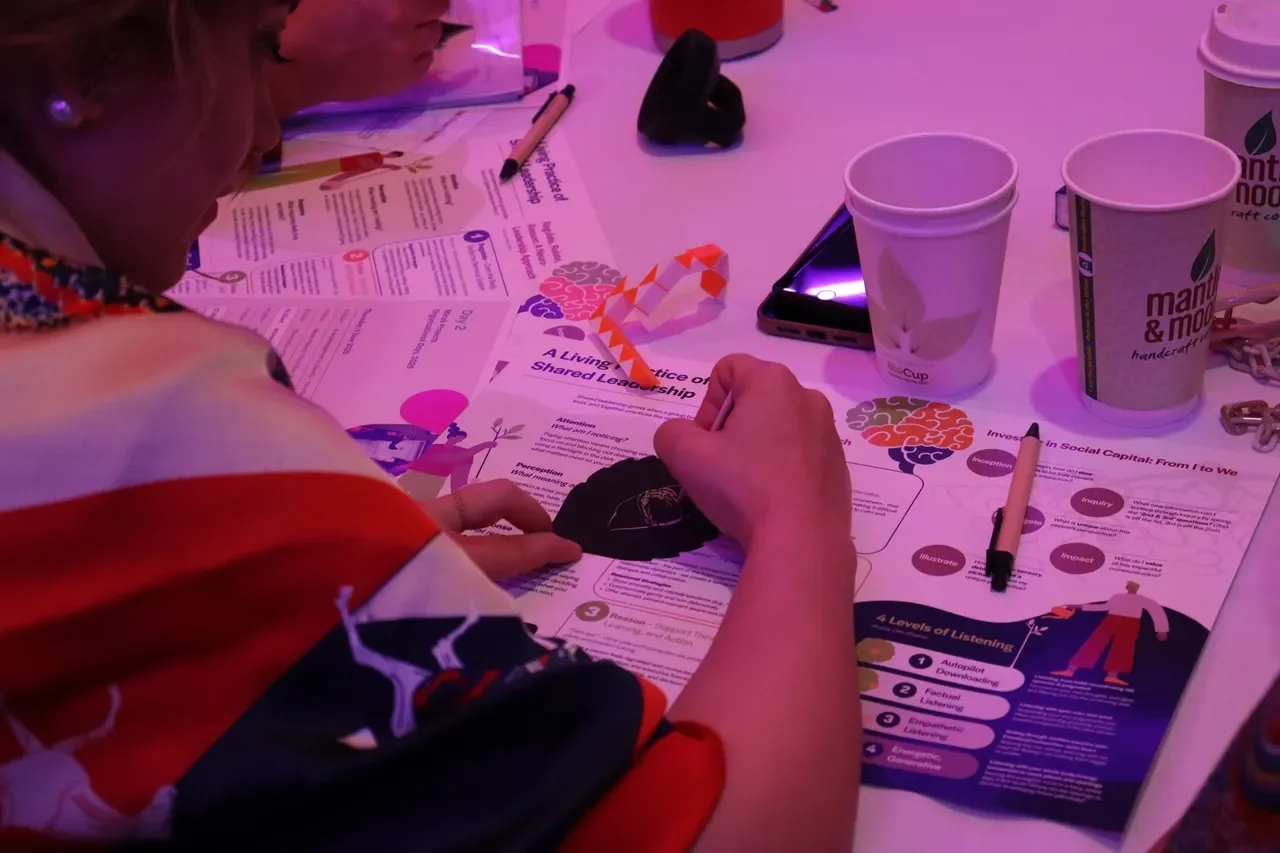
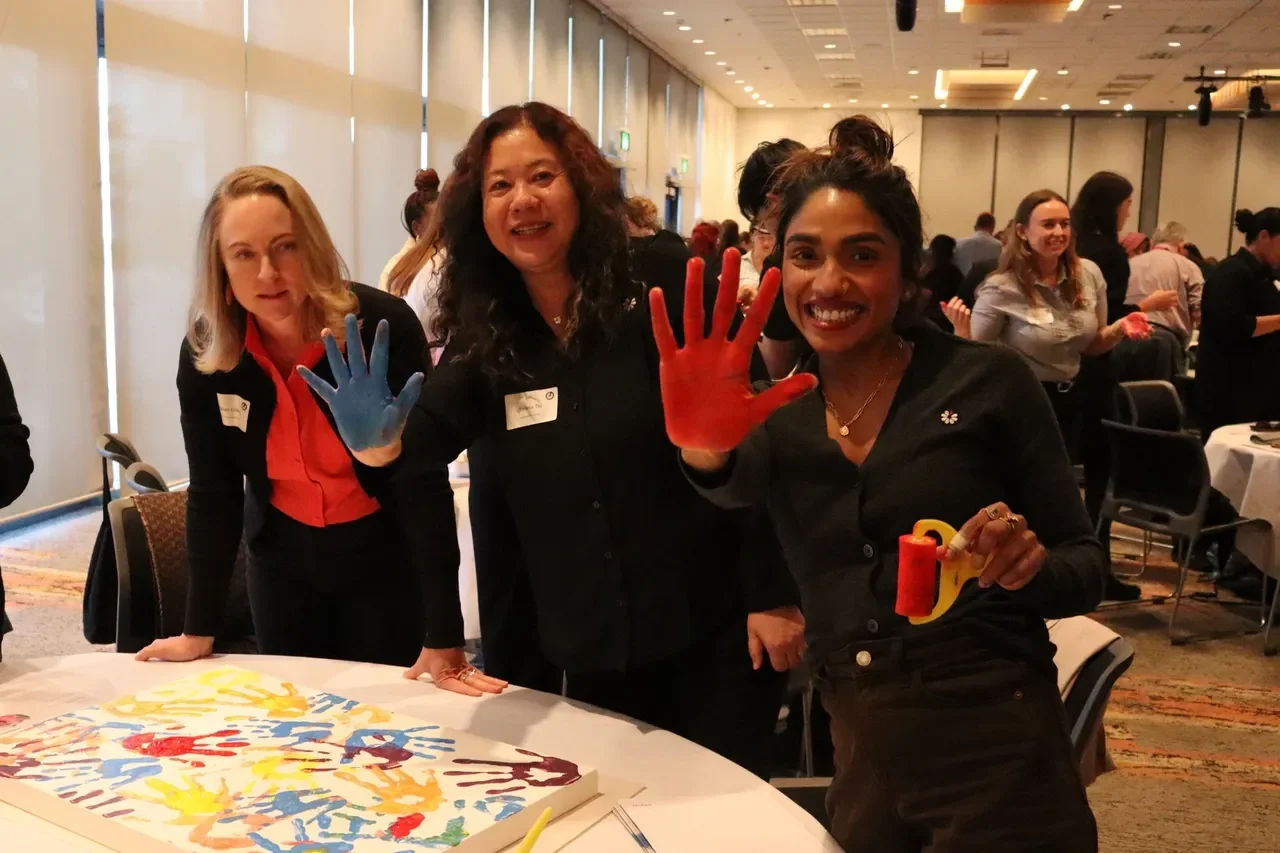
Co-designing Trust and Safety
Shared Leadership can’t be handed down. It must be grown from within.
Over the past year, Micah Projects' Senior Leaders have been articulating what Shared Leadership means in their context, grounding it in six principles (Justice, Inquiry, Nourishment, Confidence, Respect, and Accountability), and defining a Social Contract to guide behaviour.
During the Whole of Organisation Days, we invited the whole team to find their own voice and meaning in these frameworks. This process matters. It creates safety, trust and ownership - integral ingredients to Shared Leadership.
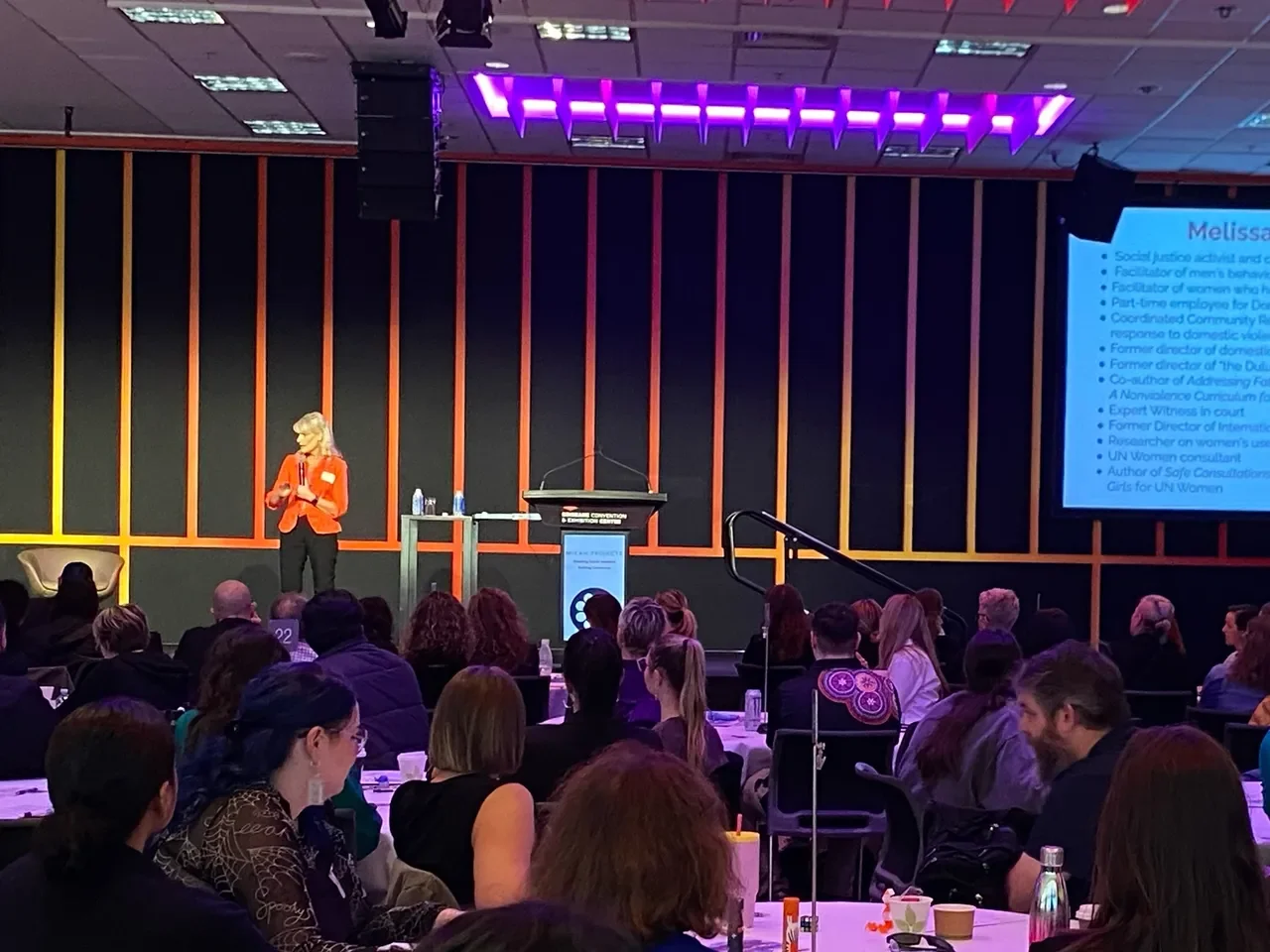
Holding Space for Those We Serve
Guest speaker, Melissa Scaia, shared a vital outward lens: working with the team to develop the emotional muscle required be truly present with the participants they serve, and hold space for others without controlling it.
At Micah Projects, that means standing with those most affected by injustice. It means ensuring that the credibility of leadership isn’t rooted in control, but in commitment, compassion, and proximity to those they serve.
A Tool of Shared Leadership: Attention, Perception, Response
Like anything new, practicing the shift to Shared Leadership can feel uncomfortable. It's also human to mistake this discomfort as danger.
But we can see discomfort as a signal: not of risk, but of growth.
Growing Together and learning to leading with others first requires us to lead ourselves.
The tool Attention. Perception. Response. is one way to support this shift.
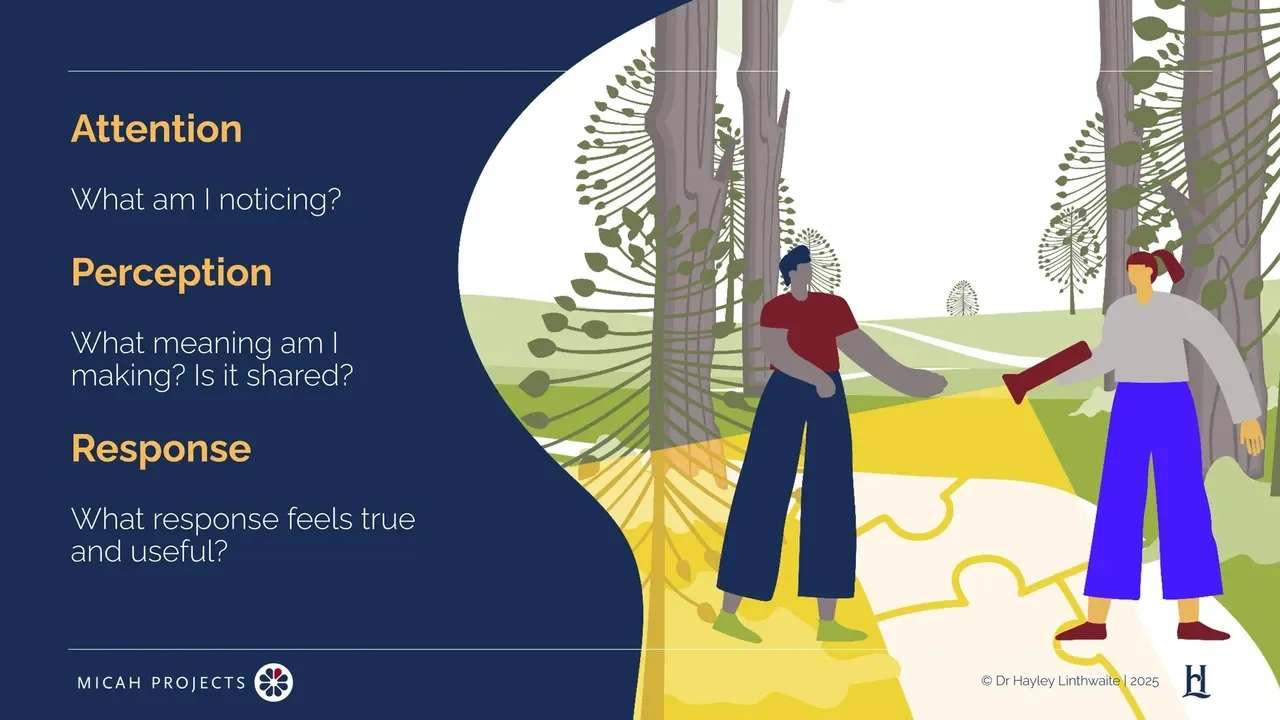
Attention: Paying attention means choosing what to focus on and blocking out distractions. It’s like using a flashlight in the dark - you shine it on what matters most so you can really see it. ASK: What am I noticing?
Perception: This is how your brain makes sense of what you see, hear, or feel. It’s like putting together puzzle pieces from your senses and past experiences to understand what’s going on around you. ASK: What meaning am I making. Is it shared?
Response: This is what you do after you notice and understand something. It could be saying something, doing something, or even deciding to wait. Your response depends on what you notice and what you want to happen next. ASK: What response feels true and useful?
Next Steps: The Roots Run Deep
I continue to be inspired by the team at Micah Projects and support their growth through ongoing Shared Leadership work with the Cluster Leads and the Emerging Leadership Program, working alongside future leaders to deepen the practice of Shared Leadership.
To the team at Micah Projects — thank you for your courage, your curiosity, and your willingness to grow together.
If your organisation is ready to step into a new kind of leadership, or if this works sparks your interest — I can help. Let's stoke the embers.
Further reading
Shared Leadership and not-for-profits:
Tams, C. (2018) Bye‑bye, heroic leadership. Here comes shared leadership. Forbes, 9 March. https://www.forbes.com/sites/carstentams/2018/03/09/bye-bye-heroic-leadership-here-comes-shared-leadership/?sh=6756c3eb2c67
Allison, M., Misra, S. and Perry, E. (2018). “Doing more with more: Putting shared leadership into practice.” Nonprofit Quarterly, 25 June. https://nonprofitquarterly.org/doing-more-with-more-putting-shared-leadership-into-practice/
Mont, S. (2017). “The future of nonprofit leadership: Worker self‑directed organizations.” Nonprofit Quarterly, 31 March. https://nonprofitquarterly.org/future-nonprofit-leadership/
Frances Bates, K. (2024). “What is Shared Leadership and Why Now?” Interaction Institute for Social Change, 9 September. https://interactioninstitute.org/what-is-shared-leadership-and-why-now/
Adaptive Leadership:
Heifetz, R., Linsky, M. & Grashow, A. (2009). “The Practice of Adaptive Leadership” Harvard Business Press. https://www.amazon.co.uk/Practice-Adaptive-Leadership-Organization-Practitioners/dp/1422105768