Movement Techniques for Emotional Agility
This resource is an extension of the embodied movement session facilitated by Dr Hayley Linthwaite as part of Susan David’s Emotional Agility Certification, Australia 2026.
Through embodied practice, we see, sense, and feel how being 'hooked', or fused with emotion, physically takes hold of us. By regulating the nervous system, we reclaim the agency needed to navigate the four movements of Emotional Agility: showing up, stepping out, walking your why, and moving on.
The tools shared here are designed to support you beyond the session. They offer simple, transportable embodied practices you can apply personally, or in your work.
Dance Floor as Training Ground
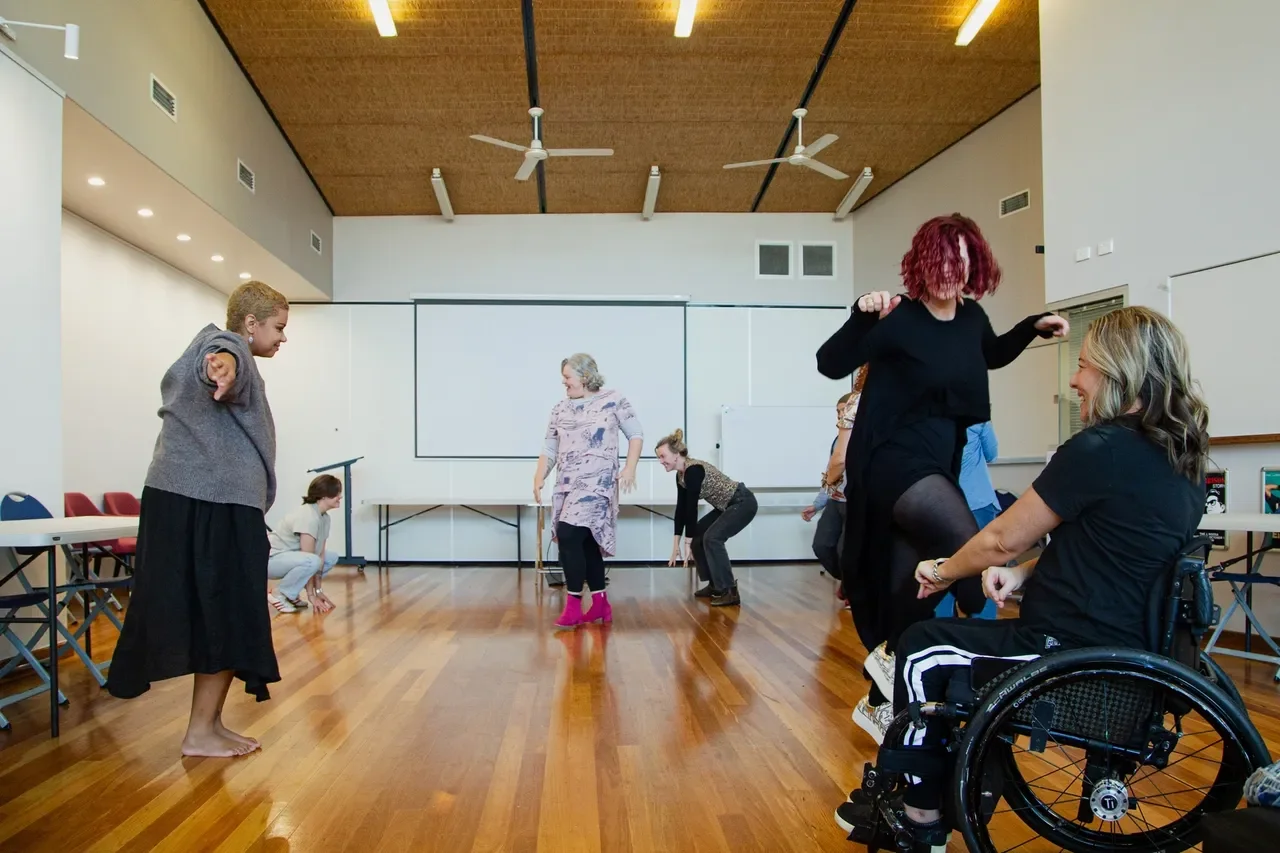
On the dance floor, we strengthen the ‘muscle’ of response over reactivity. Through practice, we develop the somatic impulse to flow with disruption in our day-to-day lives, discovering agility where we once remained locked in rigidity.
If we think of our brain as a literal VR headset – through which we are experiencing reality, then the body is our reality.
When we encounter stress, uncertainty, or perceived threats, the nervous system often activates before our thoughts have a chance to catch up. Heart rate shifts. Breath shortens. Muscles brace. Executive function, our ability to choose, can momentarily go offline.
To encounter disruption without collapsing into it, we must learn to regulate mind and body, in tandem.
Dance is one way to develop this agile response system.
On an embodied movement dance floor, we deliberately enter a state of 'disequilibrium'. This inner state of instability and tension is one of the most potent ingredients for transformative adult development and adaptive leadership.
By stepping into the unknown, shifting rhythms, expressing vulnerably in a room of strangers, we intentionally disrupt our autopilot patterned responses.
The discomfort of the dance floor is the work. Held within a safe container, these disruptions challenge and invite us to try something new. We practice staying present; we practice noticing activation without being overtaken by it. We feel, in real-time, what it’s like to move in expansive ways and find safety in experimentation.
This is an agency laboratory. There is nothing to perform, and everything to experience. Your body is your compass.
On the dance floor, we strengthen the ‘muscle’ of response over reactivity. Through practice, we develop the somatic impulse to flow with disruption in our day-to-day lives, discovering agility where we once remained locked in rigidity.
Embodied Leadership Tools
The following 5 Embodied Leadership Tools are drawn from The 360 Emergence movement map, one of the key practices informing my embodied development approach.
1.0 Breathe to Reset
Breath is the fastest lever we have into nervous system regulation.
Research aligned with polyvagal theory shows that elongated exhalation stimulates the vagus nerve, supporting parasympathetic activation and restoring executive function. In leadership terms, this is the difference between reacting and responding.
Breath is how we widen the space between stimulus and response.
SCRIPT:
"Bring presence to your shape or posture; standing, sitting or lying down
As you draw breath in, allow your intention to be rejuvenating, enlivening, nourishing
As the breath leaves the body, allow your intention to be releasing, clearing, emptying
Inhale - energise.
Exhale - let go.
Inhale —
Feel the lungs filling from the base of your belly,
like water pouring into a glass.
Allow your breath to deepen, expanding into your belly, your ribs, your chest.
Exhale —
Empty from the top down.
Like water pouring back out.
Take another deeper breath in and an even longer breath out.
With each exhale, release any tension you might be holding.
Maybe place your hands on your chest and belly —
Feel the undulation.
The dance of your breath.
Draw it in physically.
Embrace it emotionally.
Let it meet you wherever you are.
And again….
2.0 Land in Zero
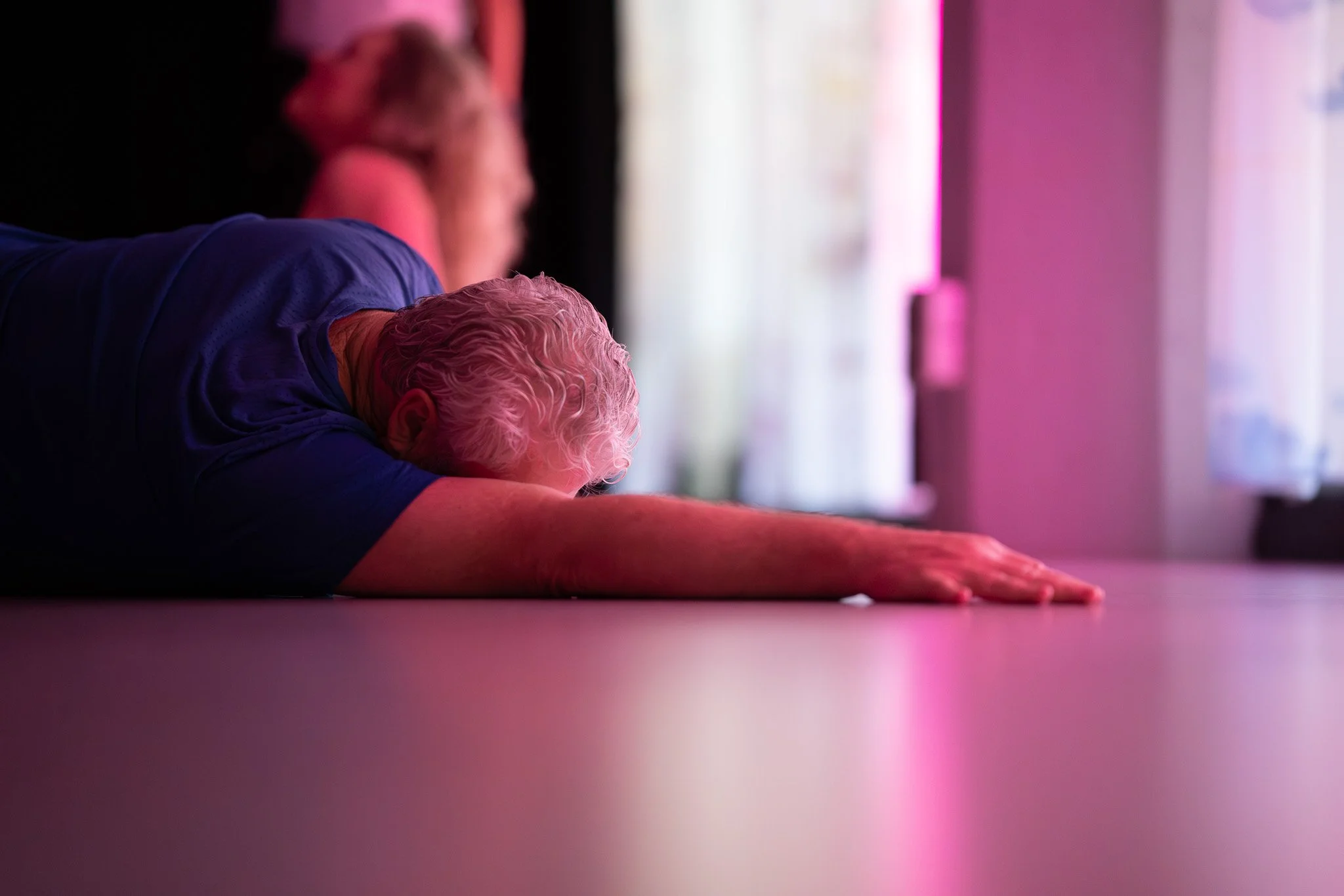
Zero is a state of void. Lightness. Openness. Infinite potential. Emptying out creates the space for expansion. Phenomena arises and dissolves. From this state you can see, sense, and feel with more clarity.
Emotionally agile leadership requires this capacity: to observe thoughts and sensations without becoming entangled in them. This capacity to witness internal fluctuation without attachment is directly linked to sustaining productive disequilibrium.
Zero is not emptiness as absence. Rather, it is emptiness as agency.
SCRIPT:
"3... 2... 1... Zero.
Land here. Find stillness.
Feet anchored. Eyes soft.
Zero is the place before movement, before meaning.
Notice the physical data your body is giving you right now.
Notice the distance between your feet.
Listen somatically: Does your body need a shift to feel more grounded?
Rock gently forward and back.
We aren't looking for perfection,
we are looking for your center,
the steady 'you' that exists underneath the fluctuating weather of your emotions.
Let’s find that landing one more time, deeper this time.
3... 2... 1... Zero.
Empty fullness… allow any judgement to evaporate…"
3.0 Throw Down our Anchors
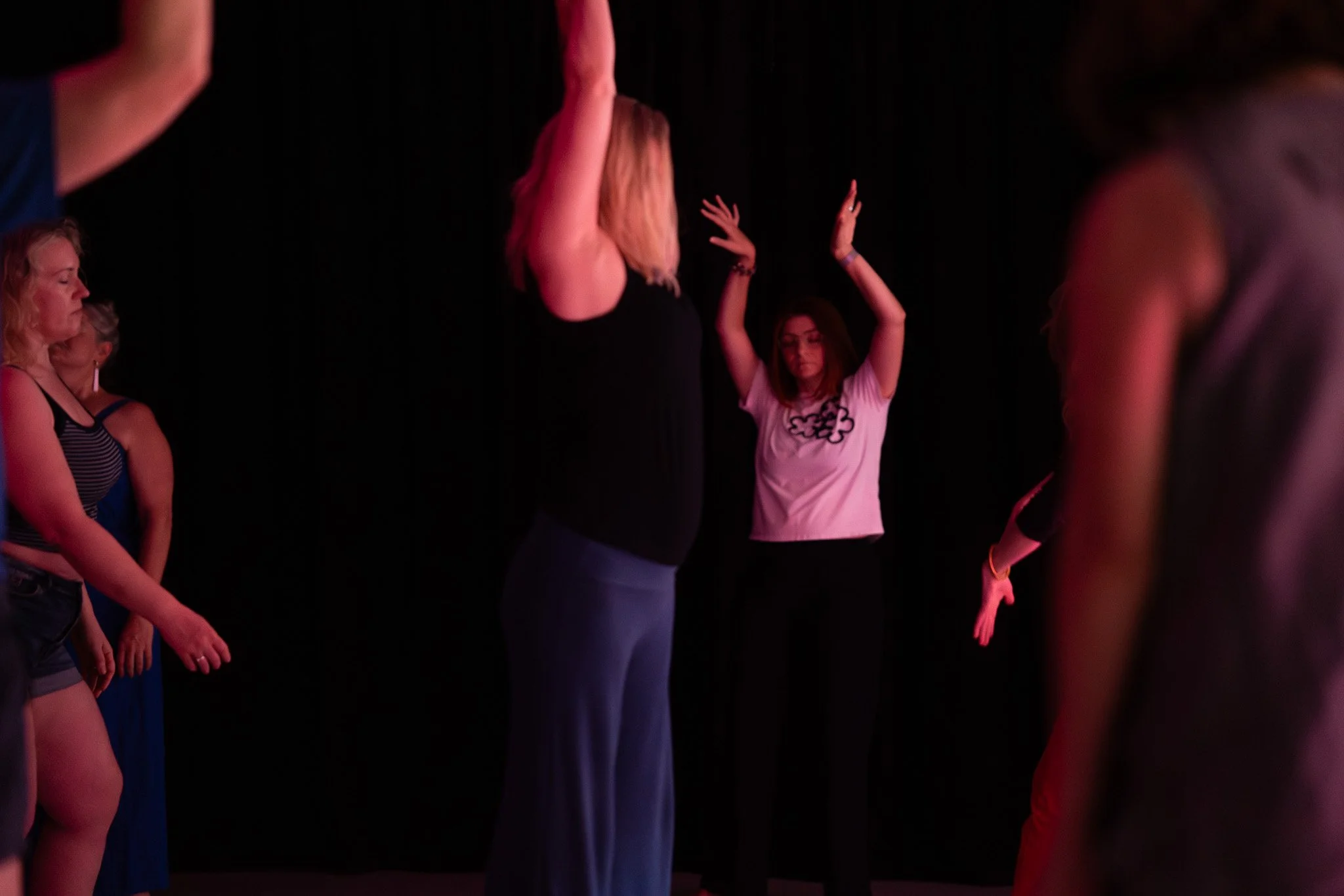
Anchoring cultivates grounded mobility.
When we feel destabilised, we often either brace rigidly, float into dissociation, or scatter into overthinking. Anchoring interrupts these patterns. It brings awareness to contact with the ground while maintaining freedom of movement. This is our space of agency, the gap where we stop being hooked by our thoughts and start being the observer of them.
In adaptive leadership theory, the goal is not to eliminate tension but to hold it productively.
Throwing down our anchors is an act of somatic stabilisation. Grounded leaders move with confidence and range.
SCRIPT:
"Stand with both feet grounded.
Let your breath come and go naturally.
Drop your awareness down into your feet.
Feel the steadiness beneath you.
The floor is always here for you, reliable, steady, unconditional.
With all the weight on your feet, imagine an anchor or anchors extending beneath you.
Anchors are these wonderful things that you sink down into the mud or the rocks beneath you, but they give you a lot of room to move at the top.
You’re not just held in one particular spot, that anchor really allows you to travel around while you’re still safely held.
You are deeply held, yet free to move.
Shift weight side to side,
forward and back,
exploring how grounding provides stability and agility.
Perhaps the knees bend a little bit.
Perhaps the ankles bend a little bit, so you are a little closer to the earth.
And if a little bounce comes in, let that happen.
Let the belly open and drop your attention down the center line,
down your central axis, which runs up and down the spine."
4.0 The Golden Thread
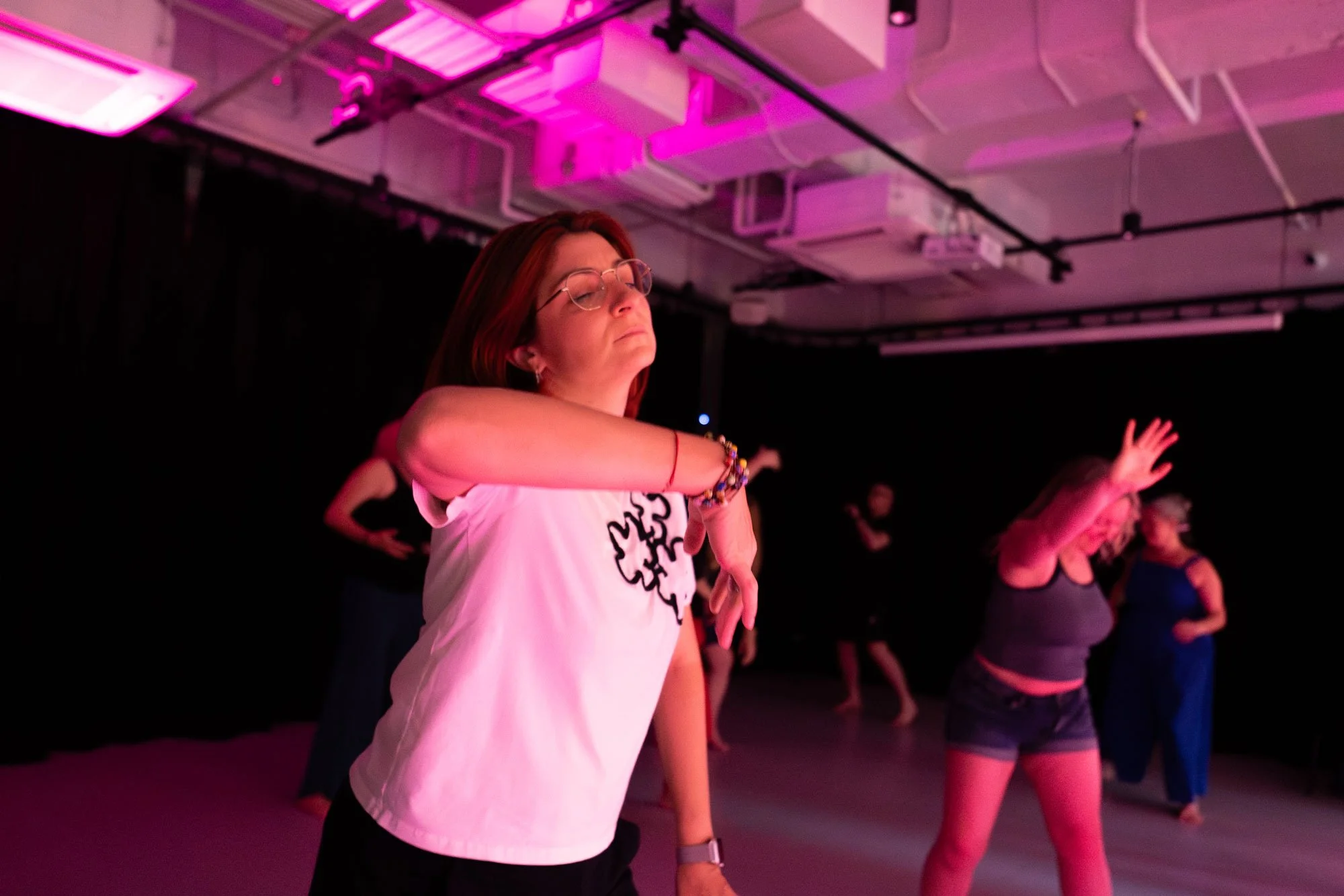
If Anchors connect you "downwards" to a strong foundation, the Golden Thread connects you "upwards and outwards" to the heights of possibility.
It represents aspiration, meaning, and continuity. In the context of emotional agility, it allows leaders to orient toward values rather than immediate discomfort. This thread acts as a moral and intentional tether, ensuring that even in the midst of volatility, our movements remain values-led rather than emotion-driven.
This visionary, meaning-making capacity is foundational to transformative potential. It balances gravity and stability with lift and forward momentum.
Anchors give stability. The Golden Thread gives direction. Together, they create a sense of coherence that enables a leader to stand firm in their history while stretching toward their future.
SCRIPT:
"Now shift your attention upward.
The crown of your head. The stretch of your spine.
Reach. Lift. Expand.
This is the direction of vision, of limitless sky, of what is yet to come.
How do you move when you remember you're part of something vast?
Let yourself be moved by that mystery.
Allow your imagination to drop a Golden Thread from the sky down through your crown, through your spine, your central axis, through your legs and your feet to your anchors. Feel this thread as a connection to a higher state of consciousness.
This Golden Thread is yours to call on, unique to you.
What do you need of this golden thread? Is it strong and palpable? Is it light and expansive? Does it lift you up effortlessly, or does it give you the stability you need right now? Whatever you need, it offers you, and you receive.
As the golden thread ascends and descends, pulsing through you, it nourishes you and holds you in your central axis, bridging your unseen to seen. And if you want to bridge from the individual to the collective, you can offer this to each other. What emotions do you want to share, trusting us to see and be seen."
5.0 10,000 Eyes
Our final tool is a perspective-taking practice.
It deliberately moves awareness between self and system: Me, We and Us.
Perspective-taking strengthens empathy, cognitive flexibility, and relational awareness. In disequilibrium, the ability to zoom out and zoom in prevents collapse into ego-defence, bias or over-identification.
Adaptive leadership requires both intimacy and altitude. This practice trains both.
SCRIPT:
"Stand or sit in stillness.
See an eye, or 10,000 eyes, on the sole of each foot.
Let the eyes open and flip down toward the earth.
Let them gaze into the soil, the stone, the ancient memory held in the land beneath us.
Let these eyes take in the view.
This is the place where you belong.
Close your outer eyes.
Take a few breaths to rest in this seeing, this sensing, this being with the slow wisdom of the earth.
Now, when you're ready,
let those eyes rise — turn them inward —
to see into the temple of your body.
Let them take in the view of your bones, your breath, your quiet courage.
Close your eyes again.
Rest here.
Let the space behind your eyelids become vast.
Now play — back and forth —
Flip the eyes toward the earth,
then back into the body,
then earth again.
Let your breath follow this pendulum.
Let your nervous system settle.
With each pass of your attention,
gently breathe that seeing into your whole body…
…Until you arrive at your crown.
Let something catch your eye —
move toward it.
Then return."
Transporting Tools Into
Everyday Practice
These 5 tools can be explored in a modular, or sequential practice.
You might:
-Begin executive coaching sessions with "Breath" and "Zero" to widen the space between stimulus and response.
-Use "Anchors" when teams feel destabilised by change.
-Introduce "The Golden Thread" during values clarification or strategic conversations.
-Apply "10,000 Eyes" in team ideation and ways of working conversations to expand perspective.
They can be practised seated in boardrooms, standing in workshops, or embedded into curated into longer, experiential "movement labs."
Importantly, they are not about performance. They are regulation, orientation, and awareness practices in the form of movement.
Further Research
I'm excited to be leading a research project into this emerging area of adult development, "Leading in Motion".
My hypothesis is that dance can be a vital tool for transformative development by simulating disequilibrium and rehearsing adaptive responses.
I'm working with a select group of leaders to look at how embodied movement practices influence growth in three critical domains:
Physiological regulation: recognising stress signals in the body and consciously responding rather than reacting in moments of challenge or ambiguity.
Emotional awareness: building agility, calm, and inner capacity.
Meaning-making capacity: opening new ways of perceiving and navigating complexity.
Want to know more?
Need a soundscape for transformation?
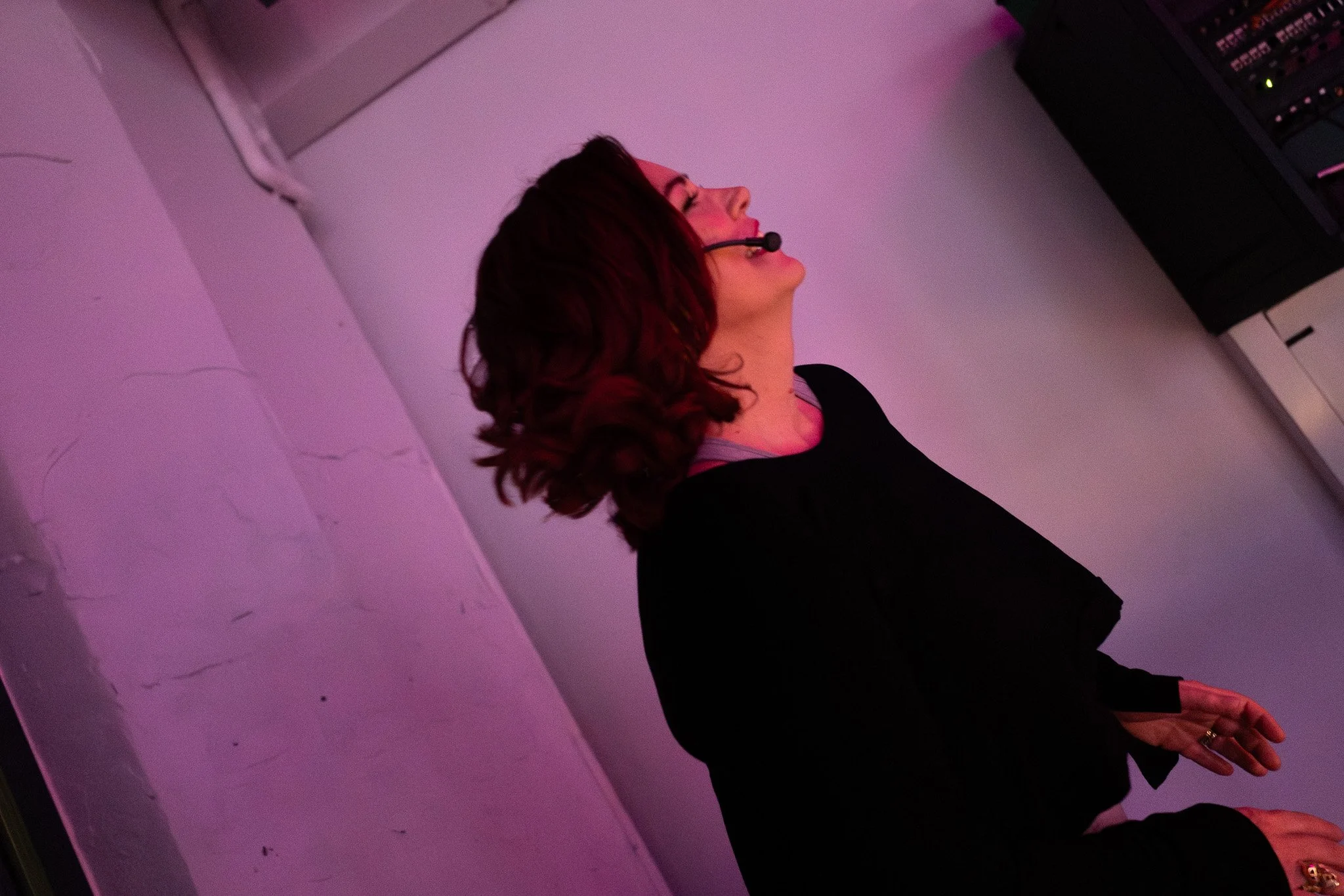
Explore these tools using one of our music mixes on Soundcloud.
A unique soundtrack is uploaded every fortnight as part of PRAXIS Brisbane Movement Labs.
Further Reading
The Way Out is Through, Alis Anagnostakis of The Vertical Development Institute The Practice of Adaptive Leadership, By Alexander Grashow, Marty Linsky & Ronald HeifetzDance for Neuroplasticity: A Systemic Review, By Lavinia Teixeira-Machado , Ricardo Mario Arida & Jair de Jesus Mari Understanding the Path of Embodied Leadership, Peter Hamil of the Strozzi Institute
Join our Brisbane movement lab